End of Tenancy Cleaning in Ireland: Room by Room Checklist
Published 29 October 2026 · 5 min read
Short answer
The RTB expects you to leave a rental clean and in a similar condition to when you moved in, allowing for normal wear and tear. You do not have to hire professionals. Use the checklist below and photograph every room when you finish.
You do not have to hire professional cleaners when you leave a rental in Ireland. The RTB says you should leave the property clean and in a similar condition to when you moved in, allowing for normal wear and tear, remove your belongings and rubbish, and keep photographs from the start and end of the tenancy. Its checklist does not require every tenant to pay for a professional clean.
What follows is a practical room by room checklist, plus some guidance on when it is worth paying someone else to do it.
Before you start
- Find your move-in photos and any inventory or check-in report. They show the condition you need to match.
- Read your lease for any cleaning clause, and ask the landlord or agent what they will check.
- Empty the property first. Cleaning around boxes takes far longer and you will miss things.
- Switch off and defrost the freezer the day before, with towels underneath.
- Gather supplies: multi-purpose cleaner, bathroom cleaner, limescale remover, oven cleaner, glass cleaner, microfibre cloths, a scourer, rubber gloves, bin bags, a hoover and a mop.
Safety first: never mix cleaning products. Bleach with ammonia releases toxic gases, and bleach with acids, including vinegar and some toilet cleaners, releases chlorine gas, according to the National Poisons Information Centre. Open windows while you work.
Kitchen checklist
The kitchen usually takes longest and gets the closest look at inspection, so give it the most time.
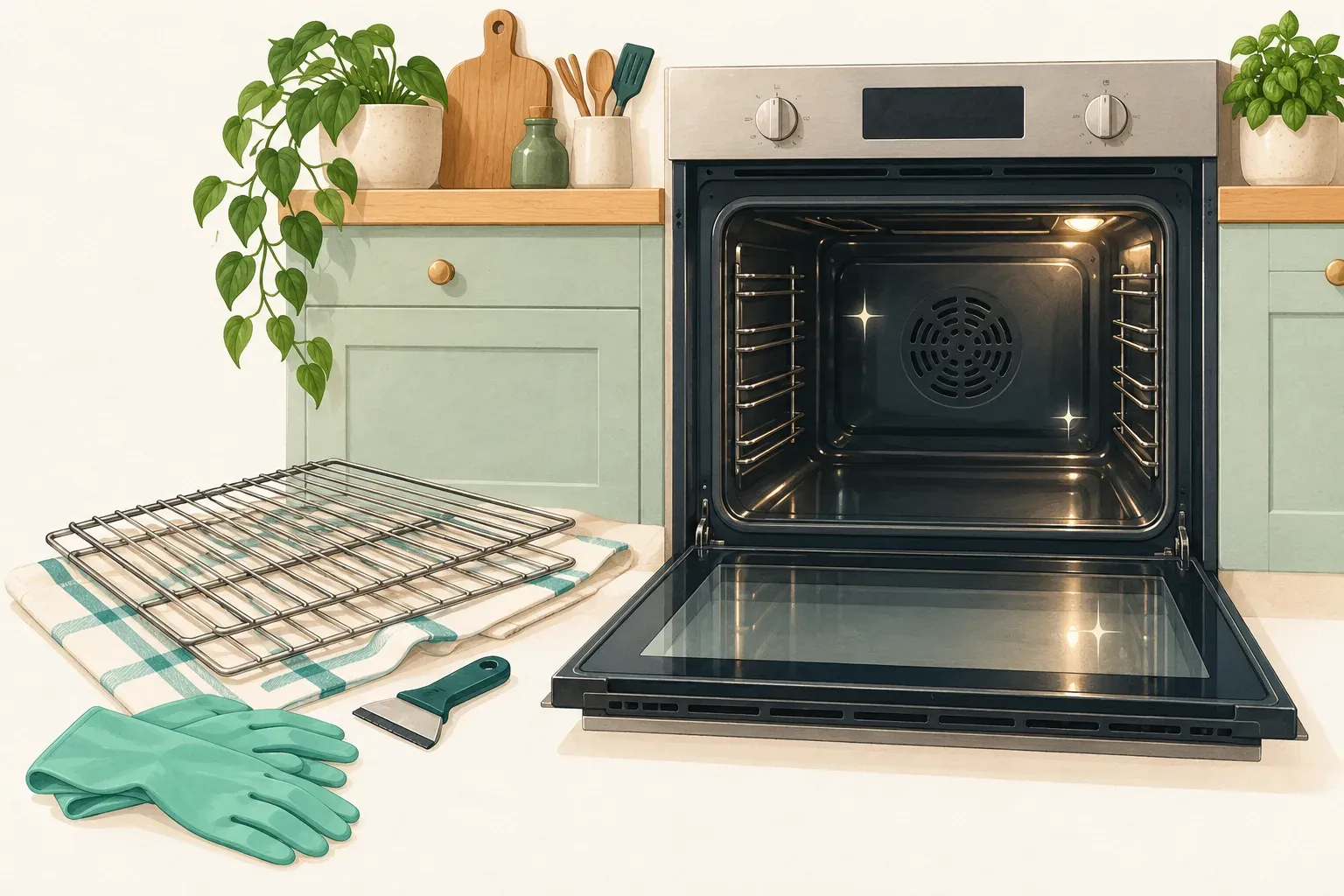
- Oven inside, including racks, trays, door glass and seals
- Hob, rings or glass top, and knobs
- Extractor hood, including the filter if it can be removed
- Fridge and freezer: empty, defrosted, wiped inside and out, door seals cleaned, left ajar
- Inside every press and drawer, crumbs removed and wiped
- Press doors, handles and the tops of wall units
- Worktops, splashback and tiles degreased
- Sink, taps and plughole descaled
- Microwave inside and out
- Dishwasher filter and door seal, washing machine drawer and seal
- Bin cleaned and empty
- Floor swept and mopped, including under the edge of units
For the fridge, safefood recommends washing shelves and compartments with warm soapy water, then rinsing and drying with clean kitchen roll or a clean tea towel. The oven is the hardest job on the list: our oven cleaning guide covers DIY methods and when a professional is worth it.
Bathroom checklist
- Toilet inside, under the rim, seat, hinges, base and behind
- Bath and shower tray, including the plughole
- Shower screen or curtain, shower head and hose descaled
- Tiles and grout, with any mould treated
- Sink, taps and overflow
- Mirror and glass
- Cabinet inside and out
- Extractor fan cover dusted
- Floor mopped, including behind the toilet
Hard water is common in Ireland, though it varies by supply zone, so limescale builds up quickly in many bathrooms. You can check your supply with Uisce Éireann's water hardness checker. Vinegar works on limescale and soap scum, but it can damage natural stone and stone tiles, so check the surface first.
If there is mould, deal with small patches with a suitable mould cleaner, following the instructions, and dry the area fully. Wear gloves and ventilate the room. Our guide to mould and damp explains more, including when mould is the landlord's responsibility.
Bedrooms and living areas checklist
- Wardrobes and drawers emptied and wiped inside
- Skirting boards, doors, door frames and handles
- Light switches and sockets wiped
- Radiators dusted, including behind where you can reach
- Window sills, frames and tracks; inside of the glass
- Curtains or blinds dusted
- Light fittings and lampshades
- Marks on walls spot cleaned
- Under and behind furniture
- Mattresses checked for stains; carpets hoovered thoroughly, including edges
Hall, stairs and outside
- Front door inside and out, letterbox and doorbell
- Banisters and stair edges
- Hot press and any storage under the stairs emptied
- Balcony, patio or garden cleared of rubbish and belongings
- Wheelie bins emptied and rinsed, if you are responsible for them
- Smoke alarm cover dusted
When you finish: take the evidence
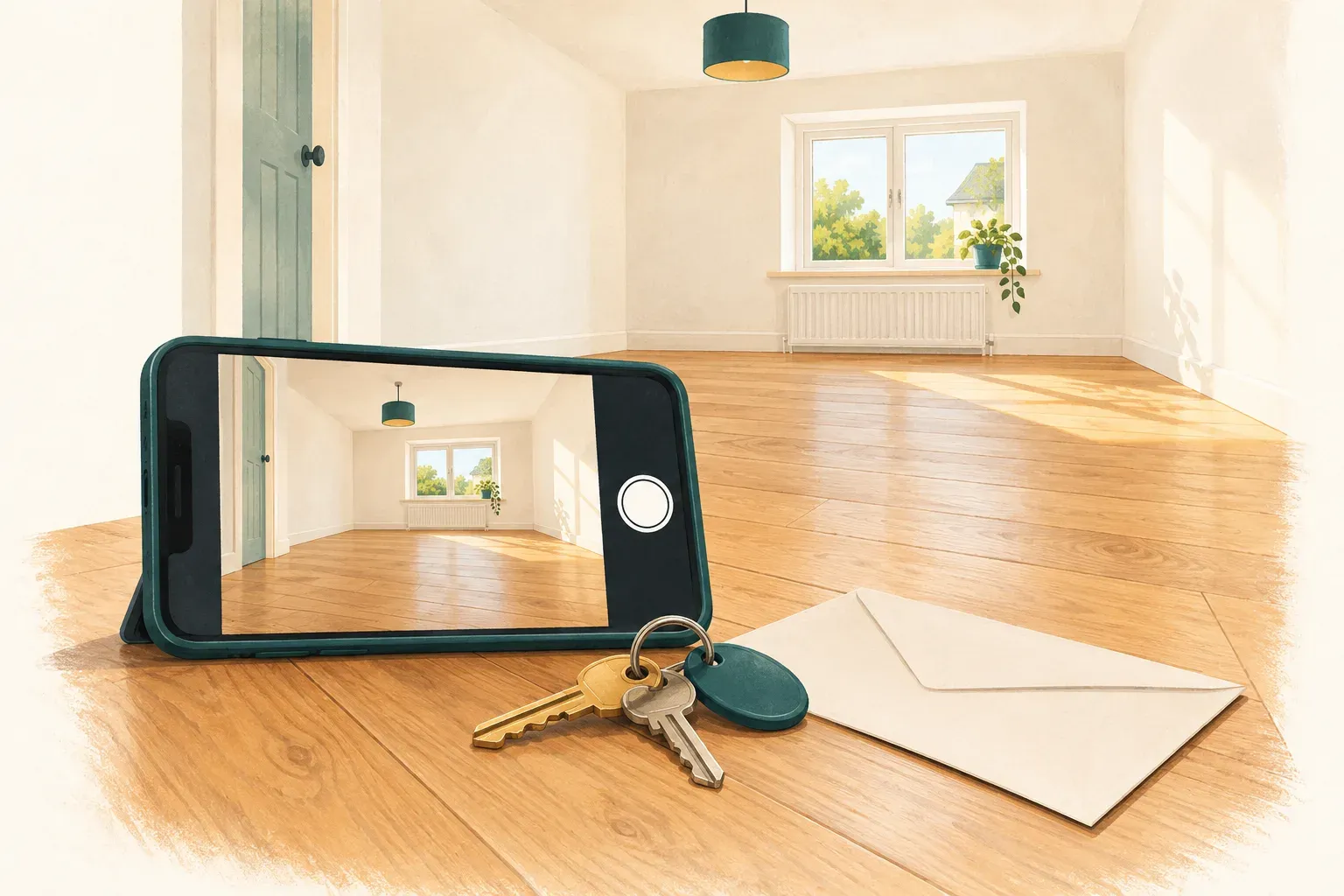
Once the clean is done, walk round with your phone. The RTB advises keeping photographs from the start and end of the tenancy, and they are your strongest protection if a cleaning deduction is disputed.
- Photograph every room from the doorway, then close-ups of the oven, hob, fridge, toilet, shower and any marks.
- Make sure the photos are dated (most phones store the date automatically).
- Take meter readings and photograph them.
- Hand back every key, and get the return acknowledged in writing.
Our guide to getting your deposit back covers what the landlord can and cannot deduct, and what to do if you disagree.
DIY or professional?
| Do it yourself | Hire end of tenancy cleaners | |
|---|---|---|
| Cost | Supplies only | Roughly €240 to €295 for a one-bed, up to €440 to €618 for a five-bed (advertised, October 2026) |
| Time | A full day or more | A few hours, often while you are moving |
| Best for | Well-kept homes, small flats, tight budgets | Heavy ovens, limescale, carpets, or no time |
| If something is missed | You go back and redo it | Ask the company to return and fix it |
The price range comes from two Irish published price lists we checked in October 2026, with different packages; see end of tenancy cleaning costs for the full breakdown and what each includes.
A middle option is to do most of the clean yourself, and book a specialist only for the oven or carpets. If you hire a business, it must provide the service with reasonable care and skill, and you should report any shortfall promptly, ideally in writing with photos, so they can put it right.
No clean can guarantee your deposit back. A landlord can deduct for things like rent arrears or damage beyond normal wear and tear, which no amount of cleaning fixes. But a clean property backed by dated photos makes a cleaning deduction hard to justify.
Find cleaners
Browse end of tenancy cleaners or start with your county, for example Dublin, Cork, Galway or Limerick. If you are moving into a new place next, our moving house cleaning checklist covers the other side of the move.
Questions people ask
How long does an end of tenancy clean take to do yourself?
Allow at least a full day for a small apartment and longer for a house, especially if the oven and limescale need work. It is much easier once the property is empty, so plan the clean for after your belongings have gone.
Do I need to clean the carpets professionally?
Only if your lease requires it or the carpets are dirtier than normal wear and tear. A thorough hoover is often enough. If you do book a carpet clean, advertised prices we checked in October 2026 started at about €35 a room.
Should I clean the walls?
Spot clean marks, scuffs and splashes with a damp cloth, testing a hidden area first. Do not repaint unless you have agreed it with the landlord, as a poor colour match can look worse than a scuff.
What if the property was dirty when I moved in?
The standard is a similar condition to when you arrived, allowing for normal wear and tear. Your move-in photos are the best evidence of what that was, so find them before you start.