Mould and Damp in Irish Homes: How to Clean It Safely
Published 29 October 2026 · 5 min read
Short answer
Small patches of mould on hard surfaces can be cleaned with a suitable mould cleaner, gloves, eye protection and good ventilation, then dried completely. Large areas, hidden mould or unclear causes need a professional, and mould returns unless the moisture source is fixed. Rented homes must be free from damp.
You can safely clean a small patch of mould on a hard surface yourself: wear gloves, eye protection and a suitable mask, ventilate the room, use a product sold as a mould and mildew cleaner exactly as its label says, and dry the surface completely afterwards. Large areas, mould that keeps coming back or mould you suspect is hidden behind walls or flooring need a professional, and none of it stays away unless the moisture causing it is fixed.
Why do Irish homes get mould?
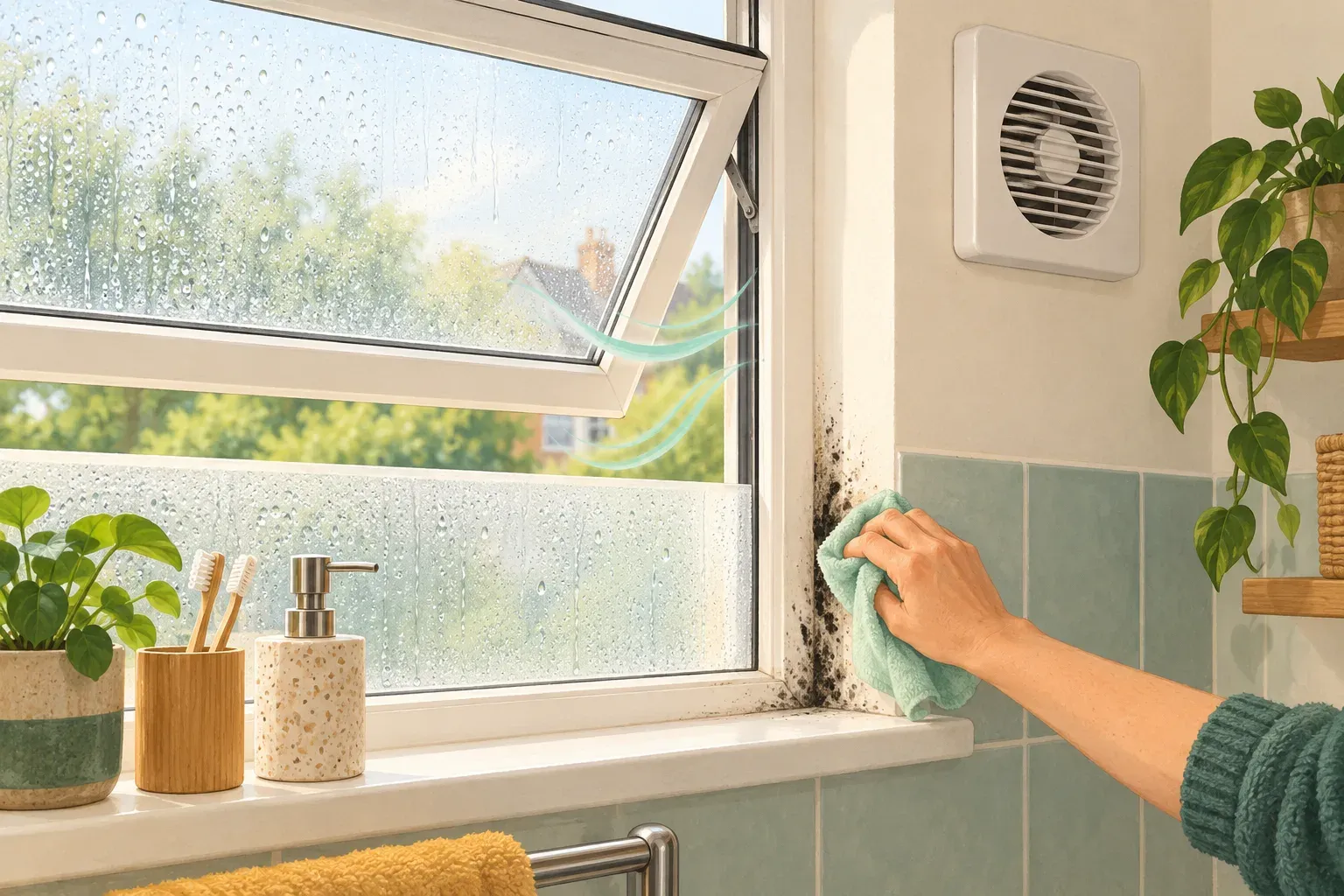
Most household mould starts with condensation. Cooking, showers and drying laundry indoors all add moisture to the air, and when that moist air meets a cold surface it condenses into water. SEAI says inadequate ventilation and cold surfaces increase the risk of mould, and that ventilation, insulation and extracting moisture at source can help.
That is why mould tends to appear in the same places:
- Window reveals, frames and seals, especially on north-facing walls
- Corners of bedrooms on outside walls, and behind wardrobes and beds pushed against them
- Bathroom ceilings, grout and silicone
- Behind furniture where air does not circulate
- Inside presses on outside walls
Other causes include leaks from roofs, gutters and plumbing, and rising or penetrating damp. Those need a builder or plumber, not a cleaner. A tide mark low on a wall, damp patches that do not change with the weather inside, or a musty smell from one spot are signs to get the building looked at.
Is mould harmful?
The HSE says mould spores can cause allergic reactions and trigger asthma symptoms. The Health and Safety Authority notes that some mould infections particularly threaten people with suppressed immune systems. If someone in the house has asthma, allergies or a weakened immune system, it is better that they are not the one doing the cleaning, and that they stay out of the room while it is done. If you are worried about symptoms, talk to your GP.
How to clean a small patch of mould
The steps below follow practical guidance published by the UK government for damp and mould in homes. It is guidance from England, not Irish housing law, but it is the clearest published advice we found. It recommends an appropriate mould-and-mildew cleaner on hard surfaces, following its instructions, then drying completely, with protective equipment and ventilation.
- Open windows and close the door to the rest of the house
- Put on rubber gloves, goggles and suitable respiratory protection
- Move furniture away from the wall and cover the floor with an old sheet or newspaper
- Apply the mould and mildew cleaner exactly as the label says, leaving it for the time stated
- Wipe with a disposable cloth, folding it to a clean side often
- Rinse if the label tells you to, then dry the surface completely
- Bag up cloths and covering sheets and put them out
- Keep the room ventilated during and after cleaning
Mouldy absorbent materials, such as carpets, soft furnishings, mattresses and ceiling tiles, may need to be thrown out rather than cleaned. Clothes can often be washed. Mouldy silicone around a bath or shower is usually best cut out and replaced once the area is dry.
Never mix mould cleaners with other products
Many mould sprays contain bleach. The National Poisons Information Centre warns that bleach mixed with ammonia produces toxic chloramine gases, and bleach mixed with acids, including vinegar and some toilet cleaners, releases chlorine gas. This is easy to do by accident in a bathroom, where a limescale remover may already be on the tiles. Rinse thoroughly with water and ventilate before switching products.
If someone feels unwell after using cleaning products, the Poisons Information Line is 01 809 2166, 8am to 10pm every day. For serious symptoms such as unconsciousness or seizures, call 112 or 999. Our guide to safe cleaning products covers storage and first aid.
When do you need a professional?
The same guidance reserves larger areas for qualified professionals, and recommends a specialist assessment where the cause is unclear or hidden contamination is suspected. We have not found an official Irish figure for how big an area is safe to tackle yourself, so use judgement and get help if:
- The mould covers more than a small patch, or keeps spreading
- It comes back quickly after cleaning
- You can smell mould but cannot see it
- There are signs of a leak, rising damp or water damage
- Someone in the house is vulnerable to its health effects
An ordinary house cleaner can wipe small surface spots as part of a deep clean, but they are not damp specialists. Ask before booking whether they are willing to tackle it.
How to stop mould coming back
Cleaning alone will not prevent mould unless the moisture source is fixed. The HSE recommends using an extractor or opening a window when cooking or showering, and drying washing outside where possible. SEAI adds that you should not permanently block air vents.
- Run the extractor fan or open a window when cooking and showering, and for a while after
- Put lids on pots and close the kitchen and bathroom doors while they are steamy
- Dry washing outside when the weather allows, or in a ventilated room with the door closed
- Keep trickle vents and wall vents open and clear of dust
- Wipe condensation off windows and sills each morning
- Leave a gap between furniture and outside walls
- Keep the house evenly heated rather than letting rooms get very cold
- Check gutters and downpipes, as overflowing water can soak into walls
Our winter home checklist has more on getting a house ready for the cold months.
Renting: what your landlord must do
The RTB says rented accommodation must be structurally sound and free from damp. Regulation 8 of the Housing (Standards for Rented Houses) Regulations 2019 requires adequate ventilation in habitable rooms, ventilation kept in working order, and adequate removal of water vapour from kitchens and bathrooms.
If you rent:
- Report damp in writing with dated photos, and keep a copy.
- Keep doing your part: ventilate, heat and wipe condensation, so it is clear the cause is the building.
- Ask for repairs to broken extractor fans, blocked vents, leaks or failed seals.
- Take photos at move-out. Mould from a building defect is different from mess left by a tenant. See getting your deposit back.
If you are a landlord, check vents and extractors between tenancies. Our guide to cleaning between tenants covers the rest. For specific disputes, contact the RTB directly.
Questions people ask
Can I use bleach on mould?
Use a product sold as a mould and mildew cleaner and follow its instructions. Whatever you use, never mix it with other products: bleach with acids such as vinegar releases chlorine gas, and bleach with ammonia releases chloramine gases.
Is mould in my home a health risk?
The HSE says mould spores can cause allergic reactions and trigger asthma symptoms, and the Health and Safety Authority notes that some mould infections particularly threaten people with suppressed immune systems. If you are worried about symptoms, talk to your GP.
Is my landlord responsible for damp?
The RTB says rented accommodation must be structurally sound and free from damp, and the 2019 minimum standards regulations require adequate ventilation and removal of water vapour from kitchens and bathrooms. Report it to your landlord in writing with photos.
Why does mould keep coming back after I clean it?
Cleaning removes the mould you can see, but it will return unless the moisture causing it is dealt with, whether that is condensation, a leak or rising damp. Ventilation, heating and fixing the source are what stop it.