Oven Cleaning in Ireland: Professional vs DIY, Prices and Tips
Published 29 October 2026 · 4 min read
Short answer
Professional oven cleaning in Ireland was advertised at about €55 to €80 for a single oven and €65 to €100 for a double in October 2026. A light DIY clean with bicarbonate of soda works for regular upkeep; heavy carbon, range cookers and moving out are where a specialist earns the fee.
A professional oven clean in Ireland was advertised at roughly €55 to €80 for a single oven and €65 to €100 for a double in October 2026. For regular upkeep, a DIY clean with bicarbonate of soda and patience does a good job; for heavy burnt-on carbon, a range cooker, or an oven that has to pass an end of tenancy inspection, a specialist is usually worth it.
What does professional oven cleaning cost?
Oven cleaning is priced per appliance. In advertised prices we checked in October 2026 from one provider and another:
| Appliance | Advertised price range |
|---|---|
| Single oven | €55 to €80 |
| Double oven | €65 to €100 |
| Range cookers, hobs, extractors | Usually quoted separately |
These are advertised prices from a small number of providers, not a national average. Specialist oven cleaners may also charge for travel outside their area, so ask for the full price. For how this fits into bigger jobs, see our deep clean cost guide and price guide.
What does a professional oven clean include?
A specialist oven cleaning service typically:
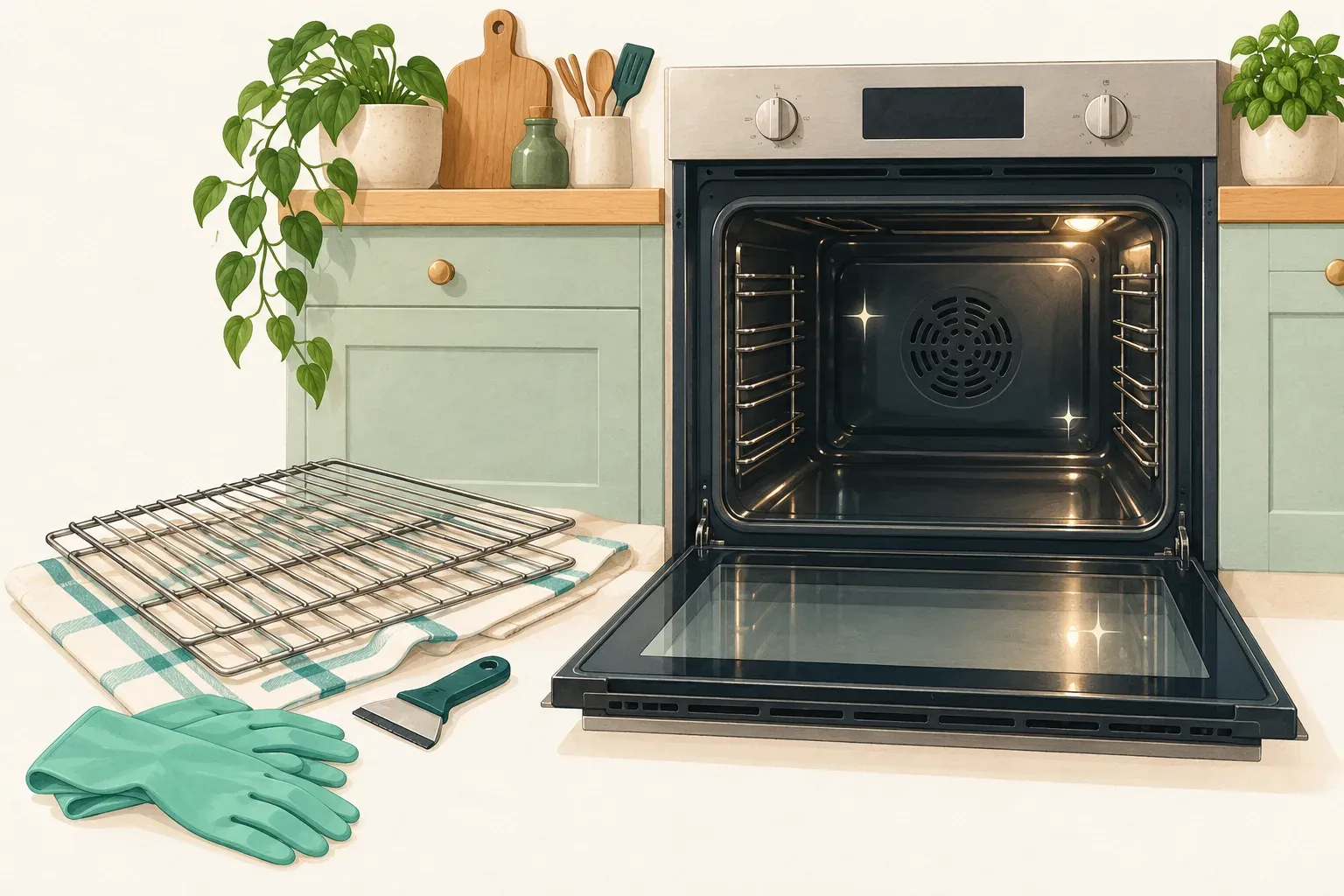
- Removes racks, trays, shelf supports and fan covers and cleans them separately, often by soaking in a heated tank
- Takes the door apart where possible and cleans between the glass panels
- Cleans the oven cavity, door seal and the outside of the cooker
- Cleans the hob and extractor filters as an add-on
- Handles range cookers and double ovens, which take far longer
The main thing you are paying for is time and kit. A badly carboned oven can take hours of soaking and scraping by hand.
When is a professional clean worth it?
- Moving out of a rental. Grease in an oven is easy to spot at a move-out inspection. Some end of tenancy price lists include it and others charge for the oven as an extra, so read quotes carefully. See our end of tenancy cleaning checklist.
- Heavy carbon build-up. Black, baked-on deposits that bicarb will not shift.
- Range cookers and double ovens. More surfaces, heavier parts, more time.
- Selling the house. Buyers open the oven at viewings.
- You'd rather not. Plenty of people would simply rather pay, and a regular cleaner may not include it. See what a regular clean includes.
How to clean an oven yourself with bicarbonate of soda
Bicarbonate of soda is a mild alkali that is useful for grease and oven spills. It works slowly, so plan to leave it overnight.
- Check the manual. Self-cleaning (pyrolytic) ovens and catalytic liners have their own instructions and should not be scrubbed.
- Make sure the oven is off and completely cool.
- Take out racks, trays and shelf supports.
- Mix bicarbonate of soda with a little water into a spreadable paste.
- Spread it over the inside of the oven and door, avoiding heating elements and the fan.
- Leave it overnight.
- Wipe off with a damp cloth and a plastic scraper, rinsing the cloth often.
- Wipe the whole cavity with clean water until no white residue is left.
- Soak racks in hot soapy water in the sink or bath, protecting the bath with an old towel, then scrub.
- Clean the door glass with the paste and a soft cloth, then rinse.
Bicarbonate of soda is also an abrasive, so avoid scrubbing delicate finishes such as stainless steel fronts or soft-coated glass unless the manufacturer permits it.
Using shop-bought oven cleaner safely
Shop-bought oven cleaners are among the stronger products in most kitchens. If you use one:
- Follow the label exactly, including how long to leave it and how to rinse.
- Wear gloves, protect your eyes and ventilate. Open a window and run the extractor.
- Never mix it with anything else. Mixing cleaning products can release toxic gases that seriously injure the lungs, and bleach with acids or ammonia is the classic example.
- Keep children and pets out of the kitchen until it is rinsed, and keep pets away for any period the label states, as the Health and Safety Authority advises.
- Store it in its original container in a locked or high press, out of children's sight and reach, as the National Poisons Information Centre recommends.
If it splashes on skin or in the eyes, rinse with running water for 15 minutes. The Poisons Information Line is 01 809 2166, 8am to 10pm every day; have the container with you when you ring. For serious symptoms, call 112 or 999. Our guide to safe cleaning products around children and pets has more.
Hob and extractor
While you are at it:
- Ceramic and induction hobs: use a hob scraper held flat for burnt-on spills, then a cream cleaner made for the surface.
- Gas hobs: lift off pan supports and burner caps and soak them, then dry and refit them as the manual describes before using the hob.
- Extractor filters: metal grease filters can usually be soaked in hot soapy water or run through the dishwasher if the maker says so. Charcoal filters are replaced, not washed.
How often should an oven be cleaned?
There is no official interval. It depends on how much you roast, grill and bake. As a rough guide, wipe up spills as soon as the oven is cool enough, give it a light bicarb clean when you notice smoke or smells on heating, and consider a professional clean when deposits no longer shift. Ovens that are cleaned a little and often rarely need a specialist.
Keeping it cleaner for longer
- Put a tray on the shelf below anything likely to bubble over.
- Cover dishes that spit, such as roasts, with a lid or foil.
- Wipe the door glass and seal after a messy cook, once cool.
- Clean the racks every few cleans, before grease bakes on.
- Check the manual before lining the oven floor with foil, as some makers advise against it.
For a full kitchen reset, use our deep cleaning checklist, or find oven cleaners and cleaning services by county, such as in Dublin, Cork or Waterford.
Questions people ask
How much does professional oven cleaning cost in Ireland?
In advertised prices we checked in October 2026, a single oven ranged from about €55 to €80 and a double oven from about €65 to €100. Range cookers, hobs and extractors may be priced separately.
Is oven cleaning included in an end of tenancy clean?
Not always. Some end of tenancy price lists include the oven and others charge for it separately, so check the quote line by line.
Can I use bicarbonate of soda on any oven?
It suits most enamel interiors and glass doors, but it is mildly abrasive. Check the manufacturer's instructions first, especially for self-cleaning or catalytic liners, which should not be scrubbed.
Is shop-bought oven cleaner safe to use?
Used exactly as the label says, with gloves, ventilation and children and pets kept away, it is designed for the job. Never mix it with other products, and keep it in its original container out of reach.