Cleaning for Dust Mite Allergies and Asthma: An Irish Guide
Published 29 October 2026 · 4 min read
Short answer
The HSE recommends washing bedclothes at 60°C every week, damp-dusting weekly and using allergy-proof bedding covers. The Asthma Society of Ireland adds frequent hoovering with a HEPA-filter vacuum, fewer carpets and soft toys where possible, and controlling damp and mould.
The HSE recommends three things for dust mite allergies: wash bedclothes at 60°C every week, damp-dust weekly, and use allergy-proof covers on bedding. The Asthma Society of Ireland adds frequent hoovering with a HEPA-filter vacuum with good suction, fewer carpets where possible, and fewer soft toys. Keeping damp and mould under control matters too, because mould is another common trigger.
This guide covers cleaning, not treatment. If you or your child has asthma or allergies, follow the plan your GP or specialist has given you.
Why bedrooms come first
Most of the official advice on dust mites is about bedding, so the bedroom is the place to start. You spend hours with your face close to your pillow and duvet every night.
Bedding
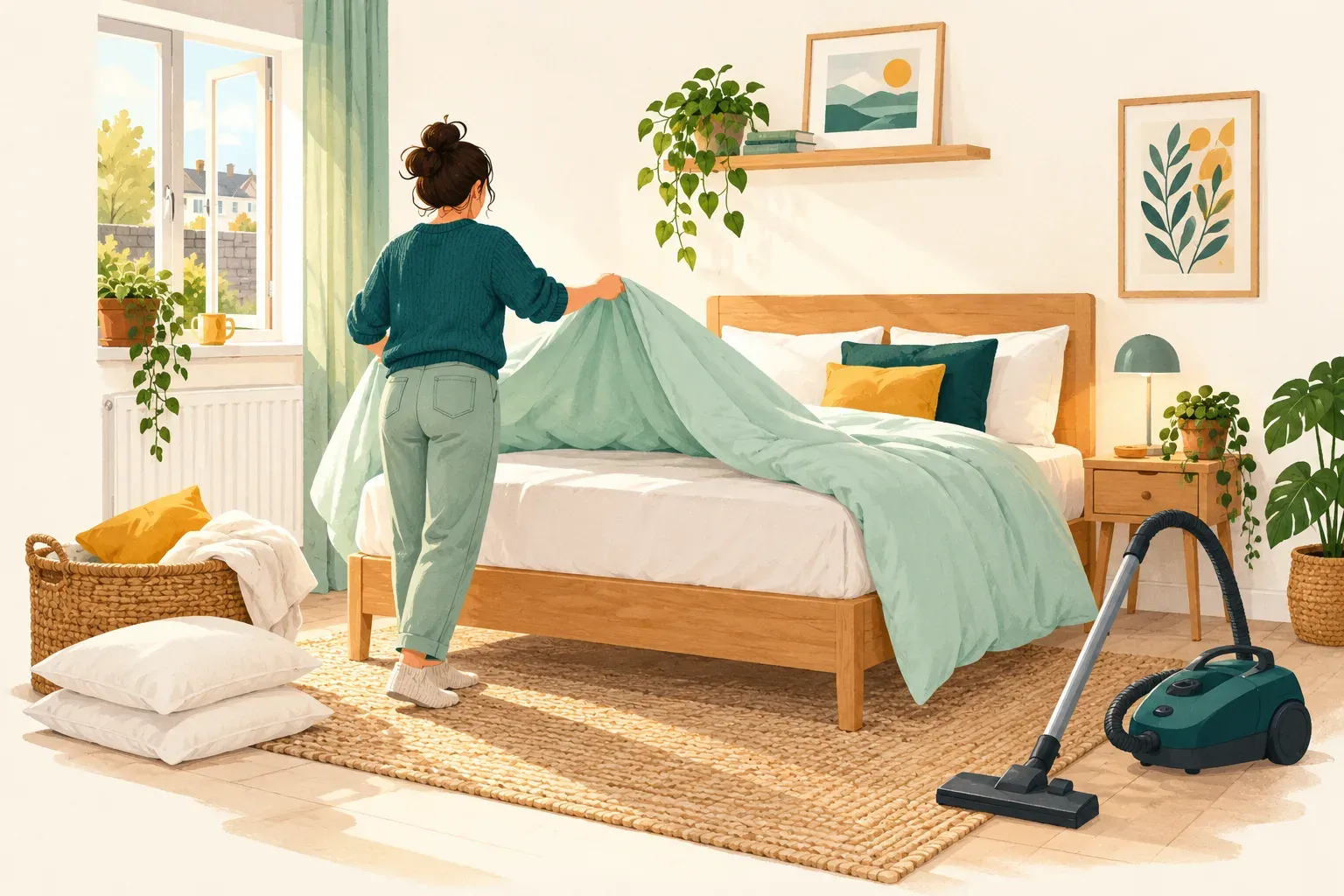
- Wash bedclothes at 60°C every week, as the HSE recommends. Beaumont Hospital's allergy leaflet explains that washing fabrics at a minimum of 60°C kills house dust mites, and recommends choosing bedding that can take that temperature.
- Use allergy-proof covers on the mattress, pillows and duvet, as the HSE advises. Wash the covers as the maker recommends.
- Check labels when you buy. Choose pillows, duvets and children's bedding that can be washed at 60°C.
- Dry bedding thoroughly, outside when the weather allows, as the HSE suggests for washing, or in a vented dryer, rather than on radiators indoors.
The rest of the bedroom
- Damp-dust surfaces weekly with a barely damp microfibre cloth
- Hoover the floor, under the bed and the mattress with a HEPA-filter hoover
- Keep surfaces clear, so there is less to collect dust
- Store clothes in closed wardrobes and drawers, not on chairs
- Choose blinds or washable curtains, and wash or hoover them regularly
- Keep soft toys to a minimum, and choose ones that can be washed at 60°C
- Open the window for a while each day to let moisture out
Damp-dust, don't dry-dust
A dry duster or feather duster lifts dust into the air, where it hangs and settles again. A damp cloth picks it up. The HSE recommends damp-dusting and the Asthma Society of Ireland recommends damp-dusting surfaces too.
Use a microfibre cloth that is only slightly damp, fold it to a clean side as you go, and rinse it often. Wash cloths regularly, since microfibre needs laundering to avoid spreading dirt from one surface to another.
Work from the top of the room down: tops of wardrobes and door frames, shelves, then skirting, then the floor.
Hoovering with allergies
The Asthma Society of Ireland recommends frequent hoovering with a HEPA-filter vacuum with good suction. A few habits help:
- Keep the filter in good condition. Clean or replace it as the manual says, or it stops working well.
- Empty the bin outdoors if you can, straight into a bag.
- Hoover soft furnishings too: sofas, cushions, mattresses and curtains, using the upholstery tool.
- Open a window while hoovering.
Carpets, rugs and soft furnishings
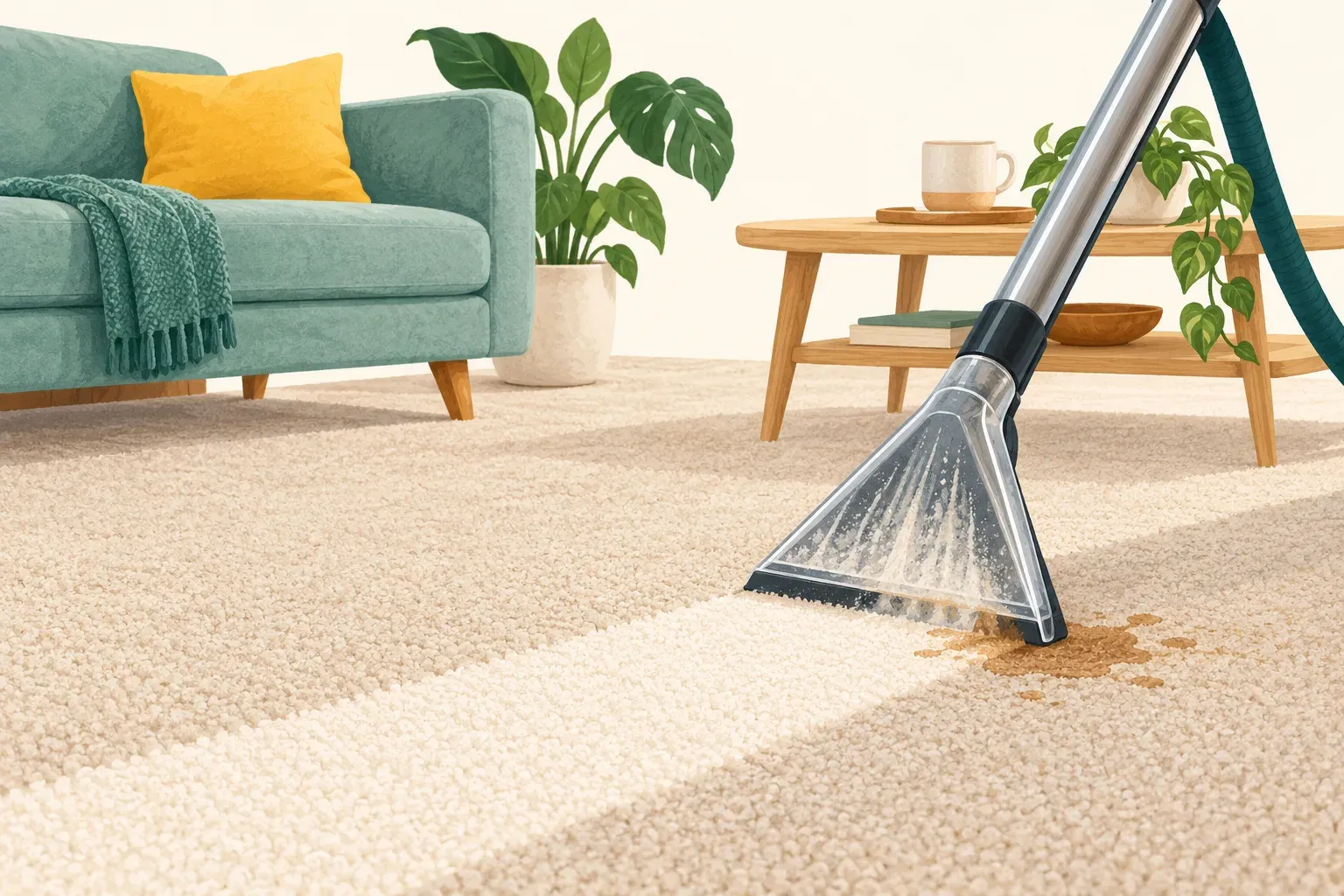
The Asthma Society recommends reducing carpets where possible. Hard floors are easier to keep dust-free with a damp mop. If replacing carpets is not practical, hoover often with a HEPA hoover and have carpets and upholstery cleaned professionally from time to time. Our carpet cleaning guide explains the methods and drying.
Loose cushion covers, throws and washable rugs can go in the wash, at 60°C where the label allows.
Damp and mould are triggers too
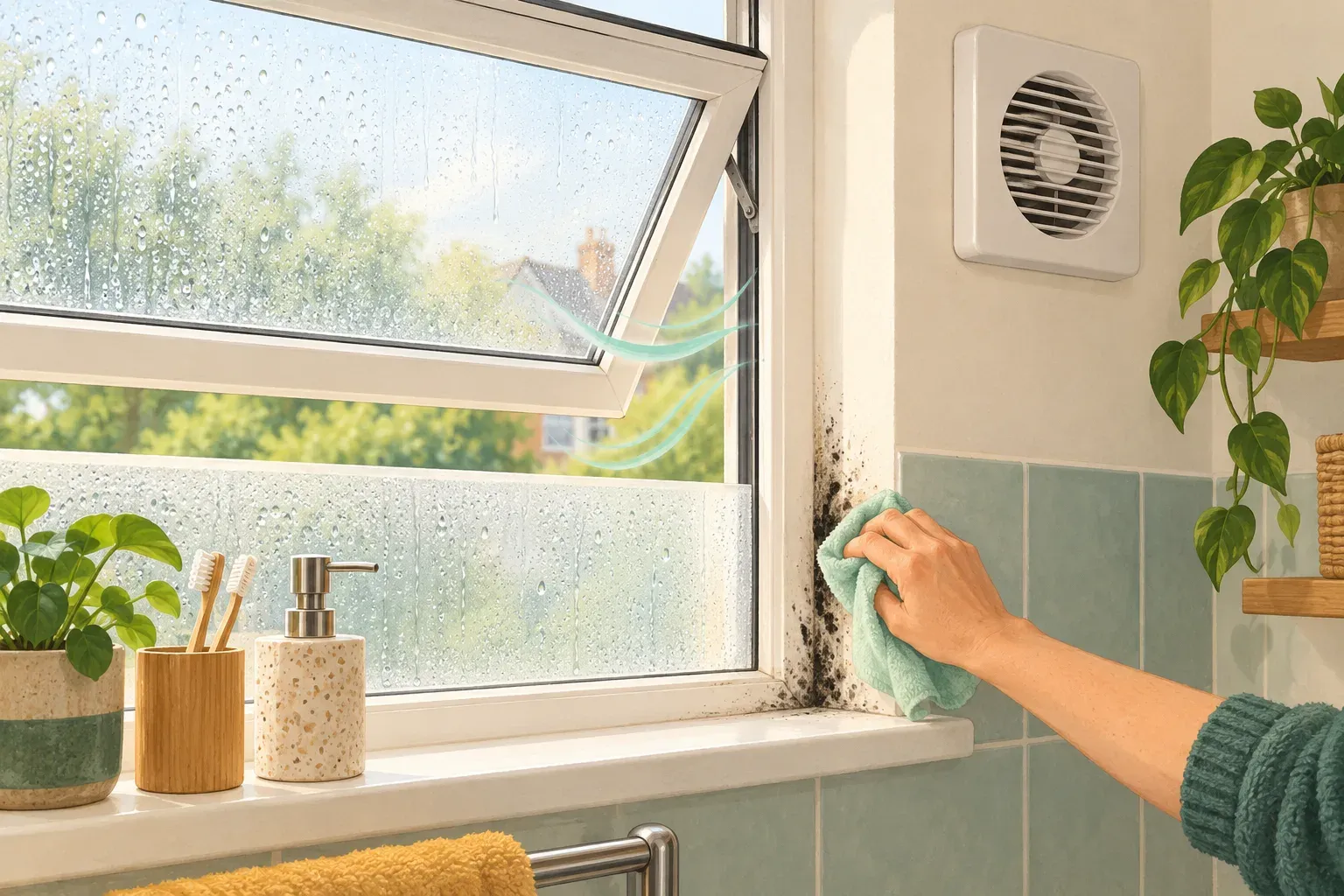
Mould spores can cause allergic reactions and trigger asthma symptoms, according to the HSE. The HSE recommends using an extractor or opening a window when cooking or showering, and drying washing outside where possible. Our mould and damp guide covers safe cleaning and prevention.
Products and scents
If strong smells from sprays, air fresheners or scented candles bother anyone in the house, a few simple swaps help:
- Use unscented or lightly scented products where you can.
- Choose liquids or wipes over aerosol sprays, so less ends up in the air.
- Ventilate while you clean and for a while afterwards.
- Never mix products: bleach with ammonia or acids releases toxic gases that can injure the lungs.
If you have pets, be careful with essential oil cleaners, which can be toxic to cats and dogs. See our guide to safe cleaning products around children and pets and our eco-friendly cleaning guide.
A weekly allergy cleaning routine
| Task | How often | Source |
|---|---|---|
| Wash bedclothes at 60°C | Weekly | HSE |
| Damp-dust surfaces | Weekly | HSE |
| Hoover with a HEPA-filter vacuum | Frequently | Asthma Society of Ireland |
| Use an extractor or open a window when cooking and showering | Every time | HSE |
| Wash soft toys, cushion covers and throws | When they need it, at 60°C where the label allows | Beaumont Hospital |
For a once-a-season reset, our deep cleaning checklist covers the high and hidden places dust collects.
Getting a cleaner to help
A regular cleaner can take on much of the routine, which also means someone without allergies is doing the dusty work. When you brief them, ask them to:
- Damp-dust rather than dry-dust
- Use your HEPA-filter hoover, and empty it outside
- Change the beds and put bedding on a 60°C wash
- Hoover mattresses and soft furnishings
- Avoid aerosols and strongly scented products
- Open windows while they work
Our cleaning brief builder writes this into a message you can send. Find regular cleaners or browse cleaners by county.
Questions people ask
Why wash bedding at 60°C?
Beaumont Hospital's allergy guidance says washing fabrics at a minimum of 60°C kills house dust mites. It recommends choosing bedding that can tolerate that temperature.
What kind of hoover is best for dust mite allergies?
The Asthma Society of Ireland recommends frequent hoovering with a HEPA-filter vacuum with good suction. Clean or replace the filter as the manual says, and empty it outside if you can.
Should I get rid of carpets if I have a dust mite allergy?
The Asthma Society of Ireland recommends reducing carpets where possible. If that is not practical, hoover frequently with a HEPA-filter vacuum and consider having carpets professionally cleaned.
Can my cleaner help with allergy cleaning?
Yes. Ask them to damp-dust rather than dry-dust, use your HEPA-filter hoover, change and wash bedding hot, and avoid strongly scented products. Write it into your cleaning brief.