Giving Your Cleaner a Key: Keys, Alarm Codes and Key Safes
Published 29 October 2026 · 4 min read
Short answer
Giving a regular cleaner a key is common once trust is built over a few visits. Use an unlabelled key or a key safe, give the cleaner their own alarm user code, agree in writing who holds access, and get everything back or changed when the arrangement ends.
Giving a regular cleaner a key is common once you trust them, and it means you do not have to be home for every visit. Do it in a way you can undo: an unlabelled key or a key safe, a separate alarm code, and a short written note of who has access.
Most of the work here is thinking it through once. After that, access becomes routine and you can stop rearranging your week around the cleaner.
When to hand over a key
There is no right moment, but a sensible pattern is:
- Trial clean while you are home. See how the cleaner works and how they treat your home.
- A few visits where you let them in. Build a routine and sort out any small issues.
- Then hand over access, once you are comfortable.
If you work from home or are often in anyway, you may never need to. Our guide to cleaner etiquette covers whether to stay in during the clean.
Your options for access
| Option | Good for | Watch out for |
|---|---|---|
| Hand over a spare key | Simple, long-term arrangements with one trusted cleaner | Hard to know if it was copied; changing the lock is the only full reset |
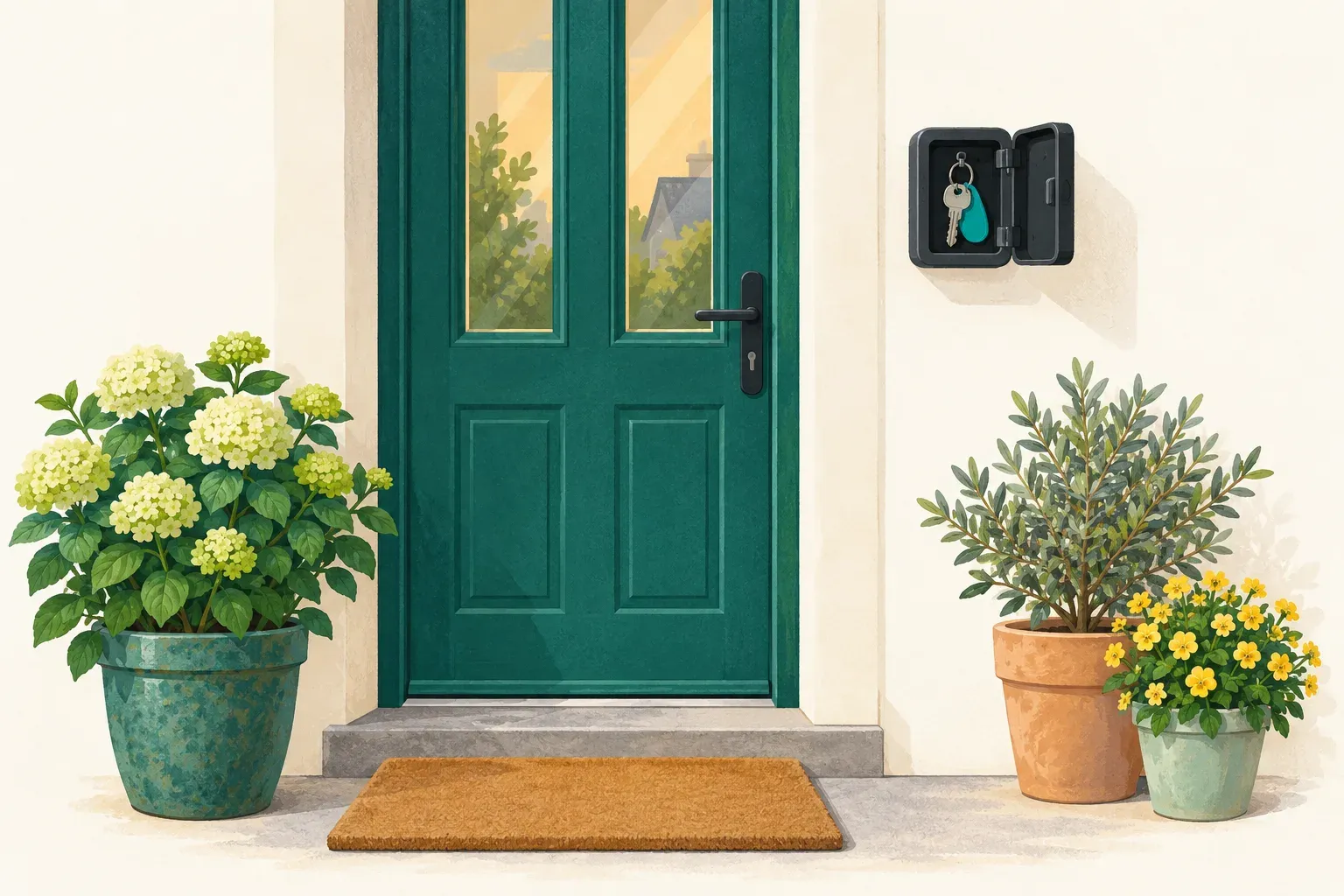
| Key safe by the door | Several people needing access, or a company that may send cover | Choose a sturdy model, place it discreetly, change the code regularly |
| Smart lock or keypad | Separate codes per person, logs of entry | Needs power and setup; tell the cleaner how it works |
| Neighbour or relative lets them in | Short-term or occasional visits | Relies on someone else being available |
| Being home | First visits, or if you are home anyway | You are tied to the cleaner's schedule |
Whichever you choose, make it easy to change if the arrangement ends.
Keys: the basic rules
- Never put your name, address or Eircode on the key or key ring
- Use a plain tag or a code that only you and the cleaner understand
- Give only the keys needed for the clean, not the shed, car or office
- Keep a note of who has a key and since when
- Agree that the cleaner tells you straight away if a key is lost
- Agree who pays to change a lock if a key goes missing
If you are using a company, ask how it handles keys before you hand one over. How are they stored between visits? Does the individual cleaner hold them, or the office? How are they labelled? What happens if one is lost? At least one Irish provider's customer help pages cover lost keys alongside damage and missing items, so it is a fair question to expect a company to answer.
Alarm codes
If you have a monitored or code-based alarm, avoid sharing your own master code. Many alarm panels let you add extra user codes, so check your manual or ask your installer. If yours does, set one up for the cleaner so you can:
- Change or delete it without changing everyone else's code
- See, on some systems, when it was used
- Remove access instantly if the arrangement ends
Show the cleaner how to set and unset the alarm on the first visit, and what to do if it goes off by mistake. Tell your monitoring company, if you have one, that a cleaner will be coming in, so a false alarm does not lead to a call-out.
Cameras, doorbells and smart locks
Video doorbells, indoor cameras and smart lock logs are common now. Tell your cleaner if any camera covers inside the home, and where. It is courteous, and it avoids an awkward discovery later.
If you employ the cleaner directly, it is more than courtesy. The WRC code of practice for people employed in other people's homes says employers should disclose any intended workplace surveillance and protect the worker's dignity and privacy.
Valuables and private things
A key gives access to your whole home, so tidy away what you would rather keep private. Before the first unsupervised visit:
- Put cash, jewellery, passports and important documents somewhere private
- Put prescription medicines somewhere private
- Close doors to rooms you do not want cleaned, and say so in your task list
This is not about suspicion. It protects the cleaner too: if something is later misplaced, there is less room for misunderstanding. See what to do if something goes missing.
Check your home insurance
Ask your insurer whether having a cleaner with a key affects your cover, particularly for theft or loss claims, and whether you need to tell them about the arrangement. While you are on the phone, ask whether your policy covers domestic employees if you employ the cleaner directly. Our cleaner insurance guide has a list of questions to ask.
What to agree in writing
A short message both of you keep is enough:
- How the cleaner gets in: key, key safe code or smart lock
- The alarm user code and how to set and unset it
- Which doors to lock and windows to close on the way out
- Where to leave the key, if it is not kept by the cleaner
- What to do if a key is lost or the alarm goes off
- Who is allowed in: the named cleaner only, or cover staff too
- What happens to keys and codes when the arrangement ends
When the arrangement ends
Ask for all keys back, change any key safe or smart lock codes, and delete the cleaner's alarm user code. If you cannot be sure every copy has been returned, consider changing the lock, especially for a front door.
This is standard practice, so it does not need to feel personal. Mention it at the start so it is expected when the time comes.
Getting started? Our guide to preparing for your first cleaner visit covers access, pets and supplies, and you can find cleaners in your county.
Questions people ask
Should I give a new cleaner a key straight away?
There is no rule, but many people wait until after a trial clean and a few visits while they are home. That gives you a chance to see how the cleaner works before they come and go on their own.
Should I give my cleaner my alarm code?
If your alarm supports it, set up a separate user code for the cleaner rather than sharing your own. You can then change or delete that code without affecting anyone else in the house.
What should happen if my cleaner loses my key?
They should tell you straight away. Agree in advance who pays for changing the lock if a key is lost, and ask a company what its own policy is before you hand a key over.
Does a cleaning company keep my key on its premises?
Some do, and some leave it with the individual cleaner. Ask how keys are stored, who can access them, and how they are labelled, since a key should never carry your name, address or Eircode.